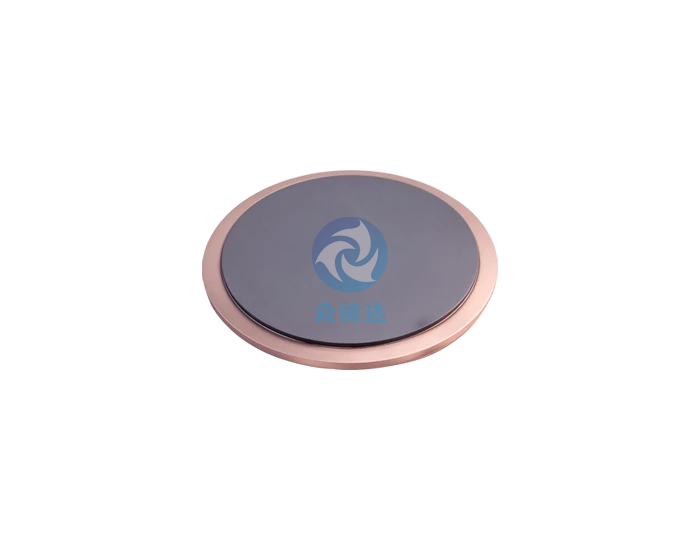
Product Introduction
In the rapidly evolving landscape of new energy and optoelectronic technologies today, high-performance semiconductor materials have become the core driving force for industrial advancement. Among these, Zinc Telluride (ZnTe) has emerged as a critical coating material, prized for its wide bandgap and superior optoelectronic characteristics and is widely used in high-end fields such as thin-film solar cells, infrared detectors, and LED light-emitting devices. This article will comprehensively analyze the strategic advantages, manufacturing methodologies, and primary applications of ZnTe targets to assist in the selection of high-purity materials for advanced industrial use.
Excellent Characteristics of Zinc Telluride Target (ZnTe)
High Purity
By maintaining a high purity of ≥ 99.99%, impurities such as lead and arsenic are stringently regulated to preserve carrier lifetime and maximize the photoelectric conversion efficiency of the deposited thin films.
High Density
A relative density of ≥98% of the theoretical limit ascertains a refined, uniform grain structure and a stable sputtering rate ensuring precise film thickness.
Excellent Stability
It features high absorption coefficient and low electron affinity, suitable for the mid-infrared band; it also has chemical stability and oxidation resistance, which extend the service life of devices.
Good Film Uniformity
It is suitable for large-area coating production, ensuring the uniform film thickness and the stability of photoelectric properties.
Wide Applications of Zinc Telluride Target (ZnTe)
Photovoltaic Solar Cells
Buffer Layer of CdTe Thin-Film Solar Cells: As a p-type semiconductor, ZnTe can form a stable p-n heterojunction with n-type CdTe, effectively reducing the interface defect density, improving the carrier separation efficiency and the long-term stability of the cell. Furthermore, its coefficient of thermal expansion (CTE) is engineered to match adjacent materials, significantly mitigating interfacial stress during thermal cycling.
Window/Back Contact Layer of Thin-Film Cells
Its electrical properties can be precisely modulated via extrinsic doping (such as As, Sb), making it an ideal candidate for the optimization of back contact in various thin-films architectures, such as copper indium gallium selenide (CIGS), directly enhancing the fill factor and open-circuit voltage of the cell.
Infrared Optics and Detectors
Infrared Optical Films: ZnTe serves as a premier material for the fabrication of infrared (IR) anti-reflection (AR) coatings, beam splitters, and high-durability protective films. With a high transmittance and an ultra-low absorption coefficient within the 3–14μm spectral range, it is a critical component in high-precision optical systems, including infrared spectrometers, thermal imagers, and night vision technologies and also for infrared anti-reflection coatings on germanium and silicon substrates.
Infrared Detectors: ZnTe-based p-n heterojunctions (such as ZnTe/TiO₂) can be made into high-sensitivity broadband photodetectors, with a response band covering 325-1064nm range, suitable for applications such as laser power monitoring, environmental monitoring and industrial process control.
Gas and Temperature Sensors: Leveraging its inherent photoconductive properties, Zinc Telluride (ZnTe) serves as a high-sensitivity medium for the development of advanced gas (such as flammable and toxic gases) sensors and precision thermometry systems, playing critical role in enhancing industrial safety protocols and environmental monitoring infrastructures.
Optoelectronic and Semiconductor Devices
Light-Emitting Diodes (LEDs) and Laser Diodes: Owing to its direct bandgap architecture, it is used to manufacture high-efficiency blue-green LEDs and near-infrared laser diodes, offering a significant application potential in fields such as, display backlighting, high-speed optical communications, and laser ranging.
Resistive Random-Access Memory (RRAM): ZnTe-based heterojunctions (such as ZnTe/Au, ZnTe/TiO₂) have tunable resistive switching characteristics, enabling multi-level SET/RESET, and providing material support for the research and development of high-density non-volatile memory devices.
Quantum Dots and Low-Dimensional Materials: ZnTe quantum dots can be used in display technologies (such as quantum dot TVs), biological labeling and photodetectors. Their size effect can modulate the bandgap to meet the specific optoelectronic requirements accros various wavelengths.
Technical Characteristics

Purity
99.99%
Relative Density
98%
Application Fields

Photovoltaic Solar Cells

Infrared Optics and Detectors

Optoelectronic and Semiconductor Devices
Contact Us