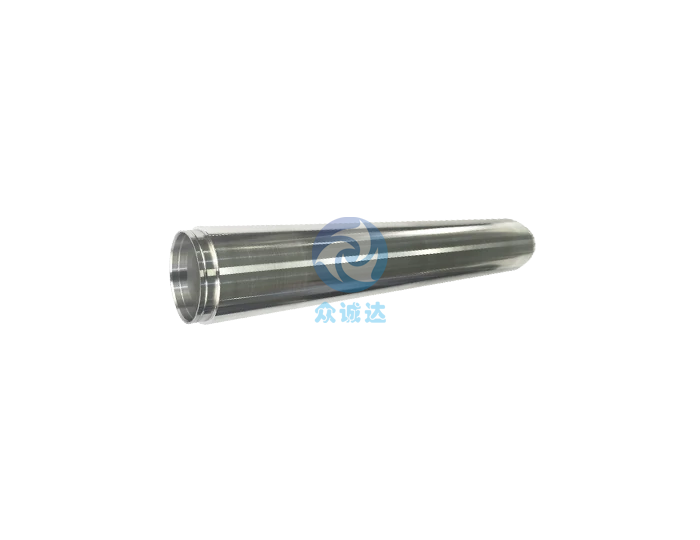
Product Introduction
Indium sputtering targets are functional targets made from high-purity indium metal, appearing silvery-gray with a good metallic sheen. Its physical parameters include a melting point of 156.61°C, boiling point of 2060°C, and a density of 7.3 g/cm³. Indium is a typical soft metal, with low mechanical strength and is easily scratched by fingernails, but it has good plasticity and ductility, making it easy to process into various target shapes.
Indium targets are essential to vacuum thin-film technology, providing superior adhesion to glass and ceramic substrates. Utilizing evaporation or magnetron sputtering, they facilitate the deposition of uniform, high-density films for photovoltaics, touch panels, and semiconductor metallization. Indium remains a critical material for fabricating transparent conductive films (TCOs) and high-reliability electrode connections.
Excellent Features of Indium Target
High Purity
ndium targets are available in 99.99% and 99.999% (4N, 5N) purity levels, ensuring pure and uniform film layers.
Excellent Ductility
Indium targets are soft, easy to process, and are suitable for various shaped targets and deposition equipment of different sizes.
Low Melting Point Characteristics
Suitable for temperature-sensitive substrates, commonly used in low-temperature deposition processes.
Excellent Electrical Conductivity
In target helps improve the conductivity of films, particularly suitable for the preparation of transparent conductive films.
Wide Applications of Indium Target
Semiconductor Manufacturing
In semiconductor manufacturing, indium targets are used to deposit indium films as conductive interconnections, efficiently transmitting electronic signals through their excellent conductivity. In integrated circuit packaging, indium films can serve as coatings for lead frames, improving packaging reliability. Additionally, in the production of electronic components such as capacitors and inductors, indium targets play an essential role in creating electrodes and conductive layers.
Photovoltaic Industry
In solar cell manufacturing, indium targets are used to create back-field electrodes and grid lines. The indium back-field electrodes effectively reflect sunlight, improving light absorption efficiency in solar cells. The indium grid lines collect the generated current, increasing conversion efficiency. Electrode films formed by sputtering indium targets have good conductivity and adhesion, ensuring the long-term stable operation of solar cells.
Decorative and Functional Coatings
Sputtered indium targets can form shiny indium films on substrates such as metals, plastics, and glasses in the decoration sector. These films provide excellent decoration for high-end furniture, automotive parts, building materials, etc. In functional coatings, indium films are used for creating reflective films, heat-insulating films, etc., such as heat-insulating films for automotive glass that effectively reflect infrared rays and reduce internal temperatures. Reflective films are widely used in traffic signs, billboards, etc., improving visibility at night.
Display Panels
In LCD, OLED, and other flat-panel display manufacturing, indium targets are used to deposit indium films as electrodes and wiring. The indium films provide good conductivity and uniformity, ensuring high resolution and fast response times in display panels, enhancing the screen's display performance.
Technical Characteristics

Purity
99.99%-99.999%
Density
7.3 g/cm³
Application Scenarios

Semiconductor Manufacturing

Photovoltaic Industry

Display panels

Optical Device Manufacturing
Contact Us